You do not need a professional kit for dog first aid: self-adhesive bandages, sterile gauze pads, a tick remover, scissors with a rounded tip, disposable gloves and the right emergency numbers cover the most common minor emergencies. Add a note with the number of your veterinary practice and of Tox Info Suisse (145). Just as important as the contents is the basic rule: first aid bridges the way to the vet, it never replaces it. Here you will find the complete checklist, the numbers for Switzerland and the rules for an emergency.
Why is it worth having a first-aid kit for your dog?
The dark season brings the typical mishaps: broken glass under wet leaves, the first walks on road salt and grit, and the festive season with chocolate and biscuits is getting closer. Small cuts on the paws are among the most common injuries in dogs, and in an emergency you do not want to start searching the flat for bandages. Your own medicine cabinet is no substitute, by the way: many human medicines are toxic to dogs, above all paracetamol and ibuprofen. Never give your dog any medication without checking with your vet first.
What belongs in the basic first-aid kit?
These basics cover the most common cases and fit into a shoebox:
- Self-adhesive bandages: stick to themselves instead of the fur and keep gauze pads in place.
- Sterile gauze pads and padding: for covering and cushioning wounds.
- Tick remover or tick card: ticks stay active in late autumn as soon as it is mild for a few days.
- Scissors with a rounded tip: With scissors like the SafePet grooming scissors you trim the fur around a small wound without injuring the skin. The rounded tip is made exactly for delicate spots like these.
- Tweezers and disposable gloves: for splinters, thorns and clean handling.
- Pet-safe disinfectant: Ask your veterinary practice or pharmacy to recommend a suitable product.
- Digital thermometer: used rectally with a little petroleum jelly.
- Paw protection: A clean sock with a poop bag over it keeps a paw bandage dry on a wet November walk.
You will find most of this at the pharmacy or in specialist shops. Keep everything together in a labelled box so you do not have to search in an emergency. Tools for daily care, from brushes to nail clippers, are in our dog care range.
Which emergency numbers belong on the list?
Stick a note inside the lid of the box with three numbers: your veterinary practice, the regional out-of-hours veterinary service and Tox Info Suisse. Find out today who covers emergencies in your region at night and at weekends, not once it happens. If you suspect poisoning, you can reach Tox Info Suisse around the clock on 145, and the advice also covers animals. Important in that case: do not feed anything, do not make your dog vomit and keep the packaging or remains of whatever he ate. You can read about the hazards waiting outdoors in our article on chestnuts, acorns and mushrooms.
What belongs in the emergency kit for walks?
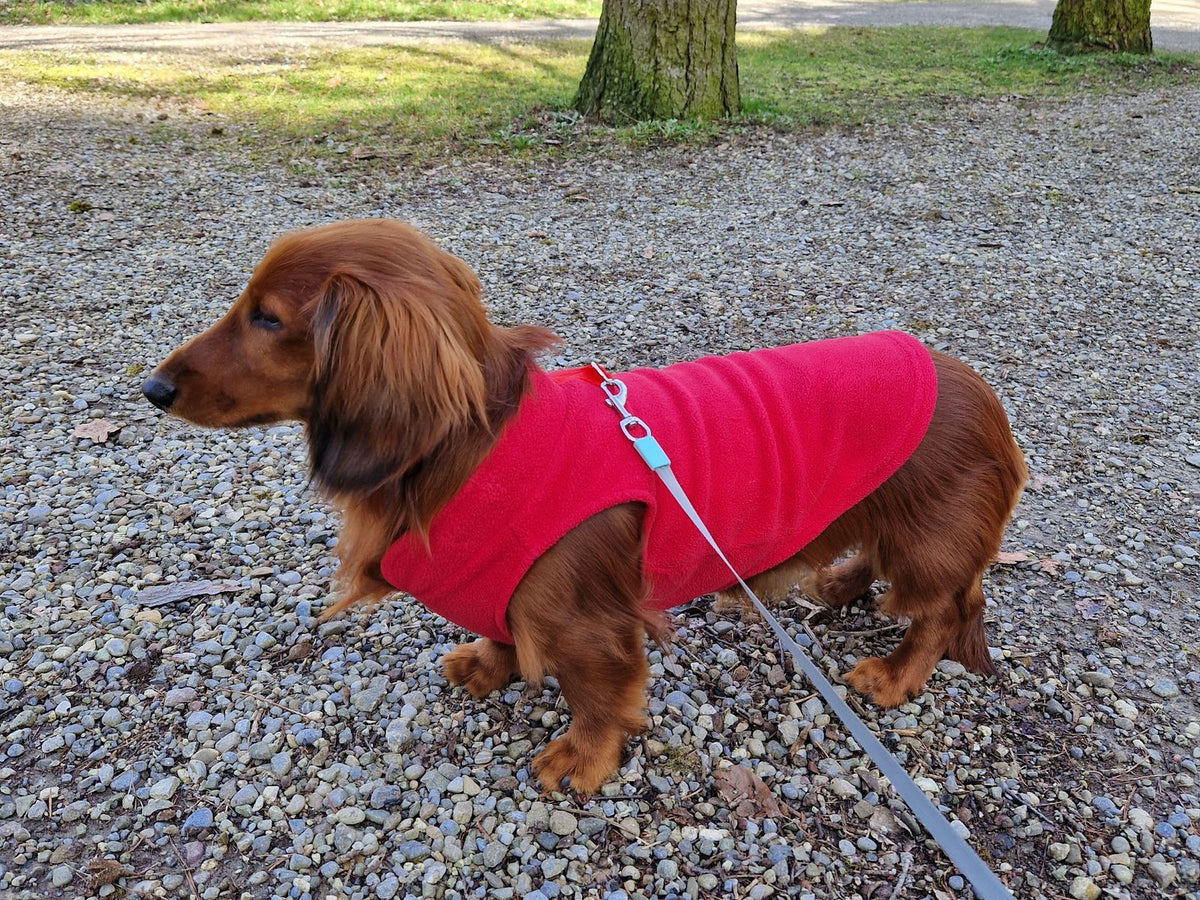
A slimmed-down version is enough for walks: one self-adhesive bandage, two sterile gauze pads, the tick remover and a few poop bags. It fits into a small zip bag and weighs next to nothing. A bag with several compartments like the SilkeN dog walking bag is practical: treats at the front, poop bags at the side, the mini kit in the large compartment. Our Vico has had the kit along ever since a torn nail edge in the woods, and luckily we have rarely needed it since.
When does your dog need to see a vet immediately?
First aid has its limits. Set off immediately or call on the way if there is heavy or pulsing bleeding, breathing problems, seizures, a suddenly bloated belly, bite wounds, suspected poisoning or if your dog seems apathetic. Give first aid, but do not lose time over it. And remember: even the gentlest dog may snap when in severe pain. Stay calm, move slowly and, if in doubt, secure the muzzle with a soft loop made from a bandage.
How do you keep the first-aid kit ready to use?
Check the expiry dates twice a year, for example whenever the clocks change, and replace anything used straight away. Store the box in a cool, dry place out of reach of dogs and children. Practise the moves when nothing is wrong: touching paws, touching the muzzle, holding still for a moment. What your dog knows and finds relaxing will stress him far less in an emergency.
Frequently asked questions
Can I give my dog painkillers from my own medicine cabinet?
No. Paracetamol, ibuprofen and similar active ingredients are toxic to dogs and can cause serious damage even in small amounts. Only give medication after checking with your veterinary practice.
What body temperature is normal for a dog?
Around 38 to 39 degrees Celsius in adult dogs, taken rectally with a digital thermometer. If the temperature is clearly above or below that, or your dog seems listless with it, it is best to contact your veterinary practice.
What do I do if my dog has eaten something poisonous?
Stay calm, do not feed anything and do not make him vomit. Keep the packaging or remains and call your veterinary practice or Tox Info Suisse on 145. The more precisely you can say what and how much your dog got hold of, the more targeted the help can be.