A ball launcher is a good choice for dogs that love to fetch, are healthy and fully grown, and enjoy the game in moderation. For puppies, dogs with joint or back problems and dogs that can barely switch off once a ball is involved, it is not the right choice. What matters are short sessions, a suitable throwing distance and a clear end to the game.
An automatic ball launcher does the throwing for you: your dog drops the ball in at the top and the machine throws it out again. That sounds like the perfect solution for cold evenings and busy days. In this guide you will find out which dogs an automatic ball thrower suits, where its limits are and how your dog learns to load the ball by itself.
Is a ball launcher good for dogs?
Yes, as long as it is used as an extra and not as a replacement for time together. It provides exercise when there is little going on outside, and many dogs enjoy working out how the mechanism works. Dropping the ball in is a small brain teaser, especially at the beginning. At the same time, fetching is a sequence of sprinting, braking and turning. This is exactly the kind of movement that strains joints and the back when it is repeated too often. The machine also keeps throwing tirelessly for as long as your dog brings the ball back. So it is up to you to set the breaks.
Which dogs is a ball launcher not suitable for?
In these cases you are better off leaving the machine out, or checking with your vet first:
- Puppies and growing young dogs: Repeated sprinting and sudden braking put a lot of strain on a developing musculoskeletal system.
- Dogs with joint or back problems: Arthritis, hip or elbow problems and disc issues do not cope well with fast starts and stops.
- Ball-obsessed dogs: A dog that trembles, whines and stops responding at the sight of a ball needs calm activities rather than even more throws.
- Very large dogs: The balls that come with it are small. With a big mouth there is a risk that a ball gets swallowed.
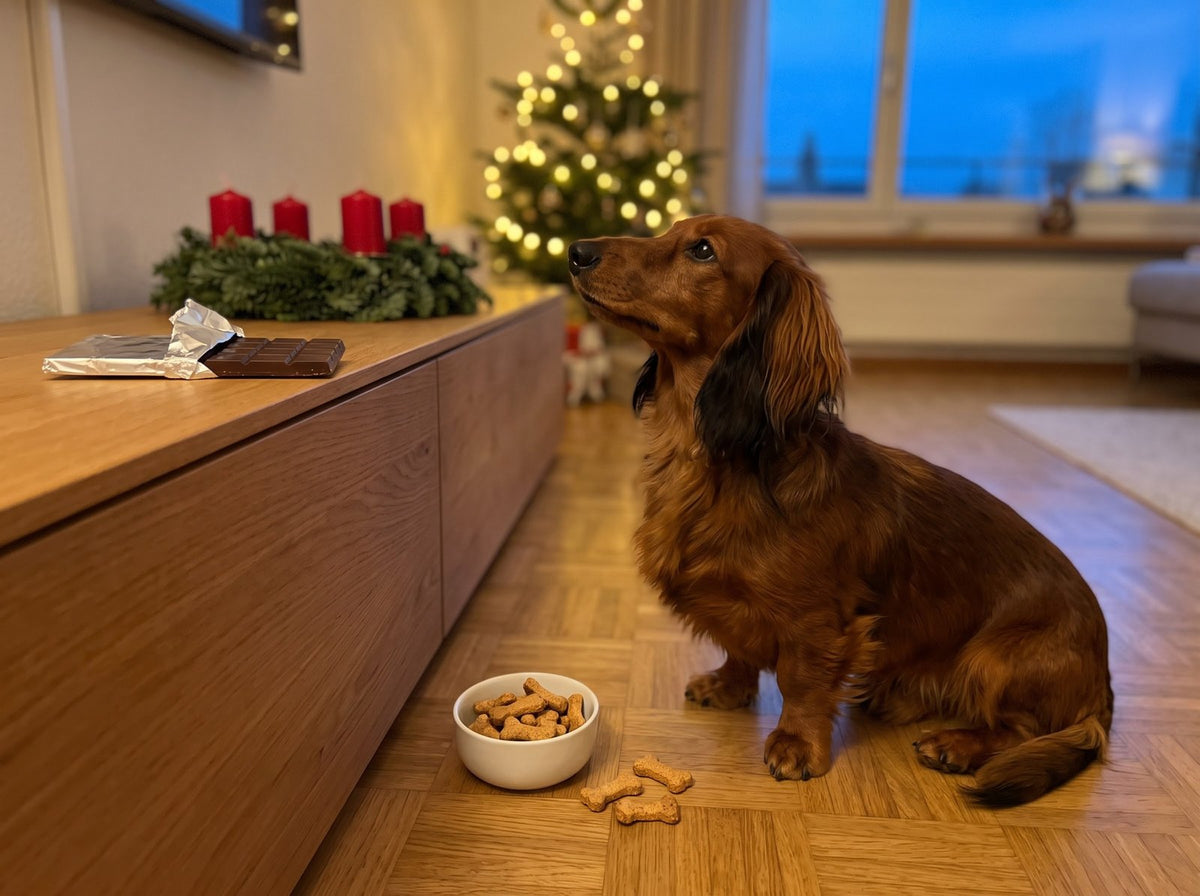
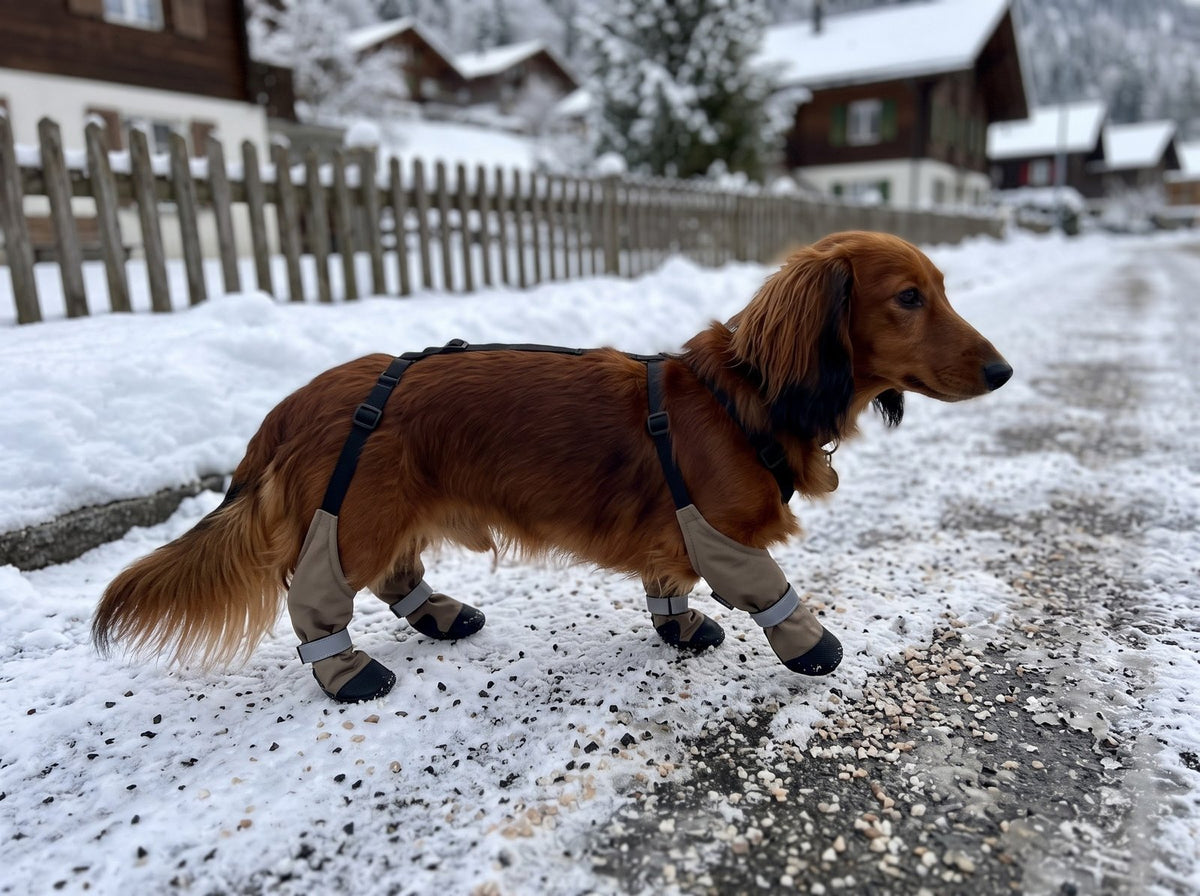
Especially with dachshunds like our Vico and their long backs, it pays to be careful: a short throwing distance, level ground and no jumping into the air. You can read more about protecting joints in everyday life in our article Protecting your dog's joints in everyday life.
Is a ball launcher suitable for small dogs?
Yes, small and medium-sized dogs in particular get on well with mini tennis balls, because the balls fit nicely in their mouths. Our FetchMaster ball launcher comes with three mini tennis balls with a diameter of 5 cm, which is smaller than a standard tennis ball. The machine itself measures around 26 × 27 × 21 cm. For very small or nervous dogs: launching the ball makes a noise. Let your dog sniff the machine while it is switched off before it throws for the first time.
How far does a ball launcher throw and which balls fit?
The FetchMaster has three adjustable throwing distances of roughly 3, 6 and 9 metres. It is powered via a mains cable, so you need a socket nearby. Only use balls the same size as the mini tennis balls supplied. The machine is designed for these 5 cm balls, so larger, soft or irregular balls do not belong in it. Check the balls regularly: if the felt is chewed off or a ball is torn, replace it.
Toys with a rope or nubs, such as our ChewyPlay throwing ball, are not meant for the machine. It is, however, great for fetch games by hand and as a change while the machine takes a break.
Ball launcher indoors or outdoors?
Both work, as long as there is enough space. Indoors, the shortest setting of about 3 metres is enough in a long hallway or a clear living room. Make sure the floor is non-slip, because dogs skid when braking on smooth parquet. A runner or rug helps. Move anything breakable out of the flight path. Outdoors on a lawn or terrace, the longer settings are possible. As the machine runs on a cable, set it up somewhere dry and do not play in the rain or on wet grass. For more ideas on keeping your dog busy indoors on grey days, see the article Rainy days: keeping your dog busy indoors.
How long can a dog play with a ball launcher?
Two or three short rounds of a few minutes are better than one long session. There is no fixed number of minutes that applies to every dog, because age, fitness and build all play a part. Stop before your dog gets tired. Signs are heavy panting, slower returns or leaving the ball lying. Let your dog walk loosely for a few minutes beforehand so the muscles are warm, and offer water and rest after the game. The machine does not replace a walk: it cannot offer sniffing, new impressions and encounters.
How do I teach my dog to put the ball in by itself?
Ideally in small steps, with patience and rewards:
- Getting to know it: Put the machine down switched off, let your dog sniff it and praise calmly.
- Watching: Switch the machine on, put the ball in yourself, and let your dog see the ball fly out and fetch it.
- Bringing it to the machine: Reward your dog for bringing the ball close to the machine, later only right next to it.
- Dropping it over the opening: Hold your hand over the funnel and have your dog release the ball there so that it falls in.
- Loading it alone: Reward every time the ball drops into the opening by itself. Soon the next throw becomes the reward.
Some dogs get the hang of it within a few days, others need weeks. That is normal. If your dog only brings the ball and you put it in, that is fine too.
When does ball play become a problem?
When your dog can no longer settle. In some dogs, repeated chasing can lead to a kind of constant excitement: they stare at the machine, whine, only want more throws and can hardly relax after the game. What helps is a fixed end signal such as "all done", followed by something calm to chew or lick, and a machine that is switched off and put away after play. It should not be left out freely accessible and unsupervised. That way the ball stays something special rather than a constant trigger.
You will find more toys for indoors and outdoors in our Dog toys category.
Frequently asked questions
Can I leave my dog alone with the ball launcher?
No. Only play under supervision so that you can set breaks, your dog does not swallow a ball and the machine does not get chewed.
Do standard tennis balls fit in the ball launcher?
Not in the FetchMaster. It is designed for mini tennis balls with a diameter of 5 cm, like the ones included.
From what age can a dog play with a ball launcher?
Only once it is fully grown. When that is the case for your dog depends on breed and size; if in doubt, ask your veterinary practice.