As soon as the first snow settles, you see them again: dogs in little boots, walking somewhat stiffly through the neighbourhood. For some people it's an adorable sight, for others unnecessary nonsense. The truth, as so often, lies somewhere in between. Whether your dog needs shoes in winter depends on his paws, his daily routine and the paths you walk on. In this article you'll learn when dog boots really make sense, how to recognise that your dog needs protection, and how to find the right size.
Why snow and road salt are a problem for dog paws
Dog paws are remarkably tough. The pads are made of thick, calloused tissue and are well supplied with blood, which protects them from the cold for a while. But winter in Switzerland brings strains that paws were not made for.
Road salt is the biggest problem. It irritates the skin between the pads, dries it out and stings in the tiniest cracks. Many dogs lick their paws on the way or at home and swallow the salt in the process. Add to that grit with sharp edges, hard, icy crusts of snow and, in long-haired dogs, clumps of snow that lodge between the toes and press like little pebbles.
On longer walks along salted pavements and roads, this all adds up. Cracked, reddened pads are one of the most common reasons why dogs suddenly become reluctant to walk in winter.
Does every dog really need shoes?
No. A healthy dog with strong pads who mostly walks on natural trails and in fresh snow generally does fine without shoes. Nature equipped dog paws for exactly these conditions.
Dog boots become useful mainly in these situations: if you walk a lot on salted paths in town or in the village, if your dog has sensitive, cracked or injured pads, for older dogs who are already unsteady on slippery surfaces, for small or short-haired dogs who get cold quickly, and on long winter hikes over ice and crusted snow. Boots also do a good job after a paw injury, because they keep the dressing clean and dry. With open wounds or deep cracks, however, the paw belongs in the hands of your vet first.
How to tell that your dog needs paw protection
Your dog can't tell you that his paws are burning, but he shows it clearly. Watch for these signs: he lifts his paws alternately while walking, or stops and doesn't want to go on. He licks or nibbles at his paws for a conspicuously long time after the walk. The pads are reddened, cracked or brittle. Clumps of ice form between the toes. Or he suddenly avoids salted paths he used to walk without any problem.
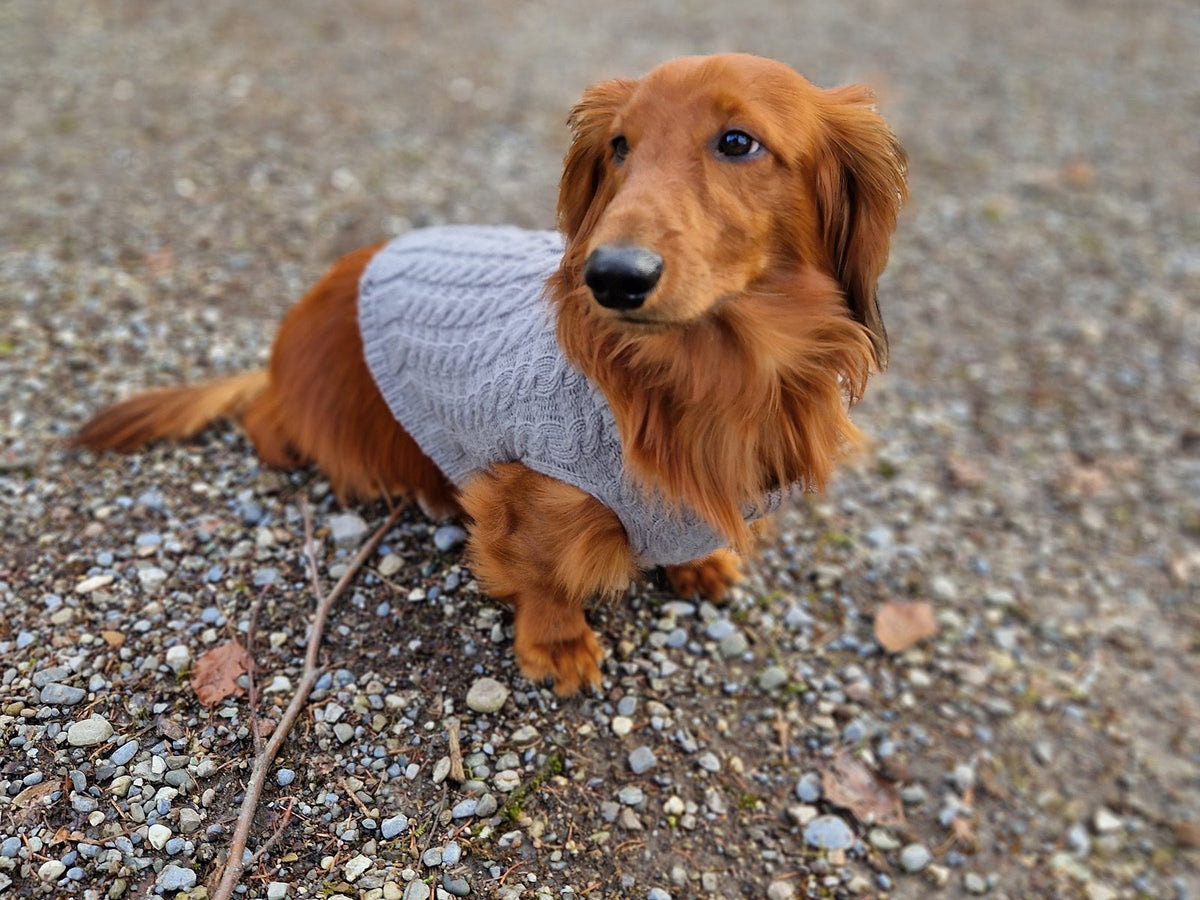
If your dog shows one of these signals regularly, it's worth trying dog boots. Our brand dog Vico, by the way, belongs to the salt-sensitive camp: on a snowy field track he walks for hours, on a salted pavement he starts prancing after a few minutes.
Finding the right size and getting your dog used to boots
Dog boots only work if they fit properly. Boots that are too big are lost after a hundred metres, boots that are too small pinch and become a real annoyance. So measure the paw before you buy: stand your dog on a sheet of paper, mark the width and length of the weight-bearing front paw and compare the values with the size chart.

Our Dog Booties (from CHF 14.95) come in five sizes from S to XXL, making them suitable for small to medium-sized dogs. They come as a set of four, have a non-slip rubber sole for secure footing on slippery surfaces and keep the paws dry in snow and wet conditions. You'll find the size chart with length and width in centimetres directly on the product page.
Give your dog time to adjust. Most dogs walk at first as if they were wearing flippers. Let him wear the boots for a few minutes indoors first, praise him and reward him with a treat. Increase the wearing time over several days before heading outside with them. After a few practice rounds, most dogs have forgotten the funny walk.
Paw care: don't forget it after the walk
With or without boots, a short paw ritual after every walk is part of winter. Rinse the paws with lukewarm water so that salt residue doesn't stay on the skin or get licked off. Then dry them well, especially between the toes. A highly absorbent dog towel such as our DryHug terry towel (from CHF 27.95) is practical for this and also does a good job after wet, rainy walks. For long-haired dogs, it also helps to keep the fur between the pads short so fewer snow clumps form.
If your dog generally gets cold quickly, you'll also find warm jumpers, jackets and coats for the cold season in our Dog apparel collection.
Frequently asked questions
At what temperature does a dog need shoes?
There is no fixed number of degrees. What matters is road salt, ice and how sensitive your dog is. Many dogs walk happily in snow at minus ten degrees but start prancing on salted paths at just above zero.
How do I get my dog used to dog boots?
Step by step and with rewards: first wear them for a few minutes indoors, praise, give a treat, then increase the wearing time over several days. Most dogs accept the boots after a few practice rounds.
What if the pads are already cracked?
Rinse the paws with lukewarm water after every walk and dry them well, avoid salted paths where possible and go easy on the pads. With deep cracks, bleeding or persistent licking, have the paw checked by a vet.