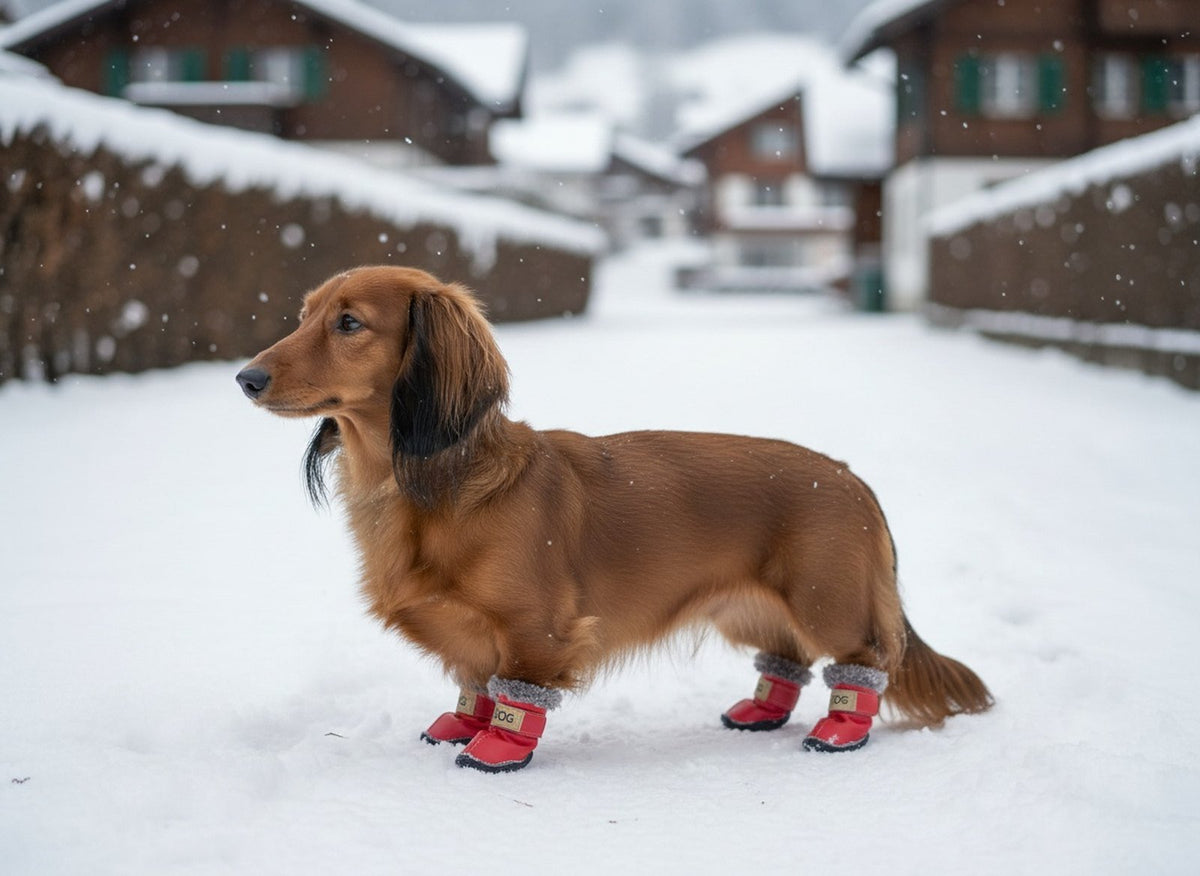
On a cold, wet November morning you can see it straight away in many dogs: some romp through the leaves as if it were midsummer, others stand at the front door with their tail tucked and look at their humans as if to say: do we really have to? Our Vico, a short-haired Dachshund, tends to belong to the second group too. Whether a dog gets cold depends a lot on breed, coat, age and health. In this article we show you how to recognise that your dog is cold and what you can do about it.
Which dogs get cold especially quickly
A St. Bernard with a dense undercoat usually shrugs off sub-zero temperatures without any trouble. It's a different story for dogs with little or no undercoat. That includes many short-haired breeds such as Dachshunds, Chihuahuas, French Bulldogs, Pugs, Pinschers or sighthounds. Small dogs also cool down faster than large ones, because they have more surface area relative to their body weight and walk closer to the cold ground.
Age plays a role as well: puppies can't regulate their body temperature well yet, and older dogs move less and often have less of the muscle mass that produces heat. Sick, very lean or freshly clipped dogs also get cold faster. And last but not least, wetness makes a big difference: a wet coat loses a considerable part of its insulating effect, which is why a damp three degrees is often more unpleasant than dry sub-zero temperatures.
Signs that your dog is cold
Dogs don't tell us in words that they're cold, but their body speaks a clear language. Watch for these signals:
- Shivering: the clearest sign. The muscles generate heat by shivering.
- Tucked tail and arched back: the dog makes himself small to expose as little body surface as possible to the cold.
- Stiff, slow movements: the relaxed trot disappears and the dog looks tense.
- Lifting paws or stopping: cold ground, snow or road salt become unpleasant.
- Pushing towards the front door: the dog refuses the usual route or pulls noticeably towards home.
- Cold ears and a cool body surface: if the ear flaps and belly feel distinctly cold, the dog has usually been cold for a while.
If your dog shows several of these signs, you should cut the walk short or protect him better from the cold next time.
What helps against the cold
The good news: it usually doesn't take big measures, just a few simple adjustments.
Keep moving. A dog who trots, plays and sniffs produces heat. Long periods of standing and waiting, for example outside the shop or during a chat with the neighbours, are not ideal in the cold. Better to keep a brisk pace and make the round a little shorter instead.
Several short walks instead of one long one. On really cold days, two or three shorter walks are more pleasant for cold-sensitive dogs than one extended outing.
Dress your dog appropriately. For dogs without an undercoat, a coat or jumper is not a fashion gimmick but sensible weather protection. For dry, cool autumn days, a Doggy Cardigan (from CHF 19.95) is a good choice, for example: soft knit with a ribbed collar, cuffs and hem, easy to put on and take off, and available in eight colours from beige to wine red. When it gets really cold, a fleece vest such as the Pup-Peroni Parka (from CHF 14.95) does a good job. It is cut specifically for small dogs such as Dachshunds, French Bulldogs or Chihuahuas and has a D-ring you can attach the lead to directly. You'll find more warm options in our Dog apparel collection.
Pay attention to the fit. A coat only keeps your dog warm if it fits properly. Before ordering, measure the back length, chest and neck circumference and compare the values with the product's size chart. Clothing that is too tight chafes and restricts movement; clothing that is too loose loses heat and slips.
Dry your dog off well after the walk. A wet dog keeps cooling down even indoors. Rub him dry after walks in rain or snow, especially the belly and paws.
Offer a warm, draught-free place to sleep indoors. The bed should not sit directly on a cold floor or in a draught. An insulating mat or a raised bed helps to retain warmth.
When you should see the vet
Occasional shivering on a cold day is no cause for concern as long as it stops once the dog is warm again. You should take notice if the shivering persists, the dog seems apathetic, his body temperature feels noticeably lower or coordination problems appear. These can be signs of hypothermia, which should be checked by a vet. If your dog suddenly gets cold much more easily than before, a check-up is also worthwhile, because hormonal or age-related causes, among others, can be behind it. When in doubt, it's better to ask your veterinary practice one time too many.
Frequently asked questions
At what temperature does a dog get cold?
There is no fixed number of degrees. Small, short-haired or older dogs can already feel cold at temperatures around five to ten degrees, especially in wind and wet weather. Hardy breeds with a dense undercoat are often little bothered even by frost. Watch your dog; he will show you when it gets too cold for him.
Isn't a dog coat over the top?
For dogs with a dense undercoat, usually yes. For short-haired, small, old or sick dogs, on the other hand, a well-fitting coat is sensible protection, comparable to a jacket for us. What matters is that it fits properly and doesn't restrict the dog's movement.
Does shivering help a dog warm up?
Yes, shivering is a natural reaction by which the muscles generate heat for a short time. But it is also a clear signal that the dog is cold. You shouldn't ignore persistent shivering; warm the dog up and plan the next walk better.