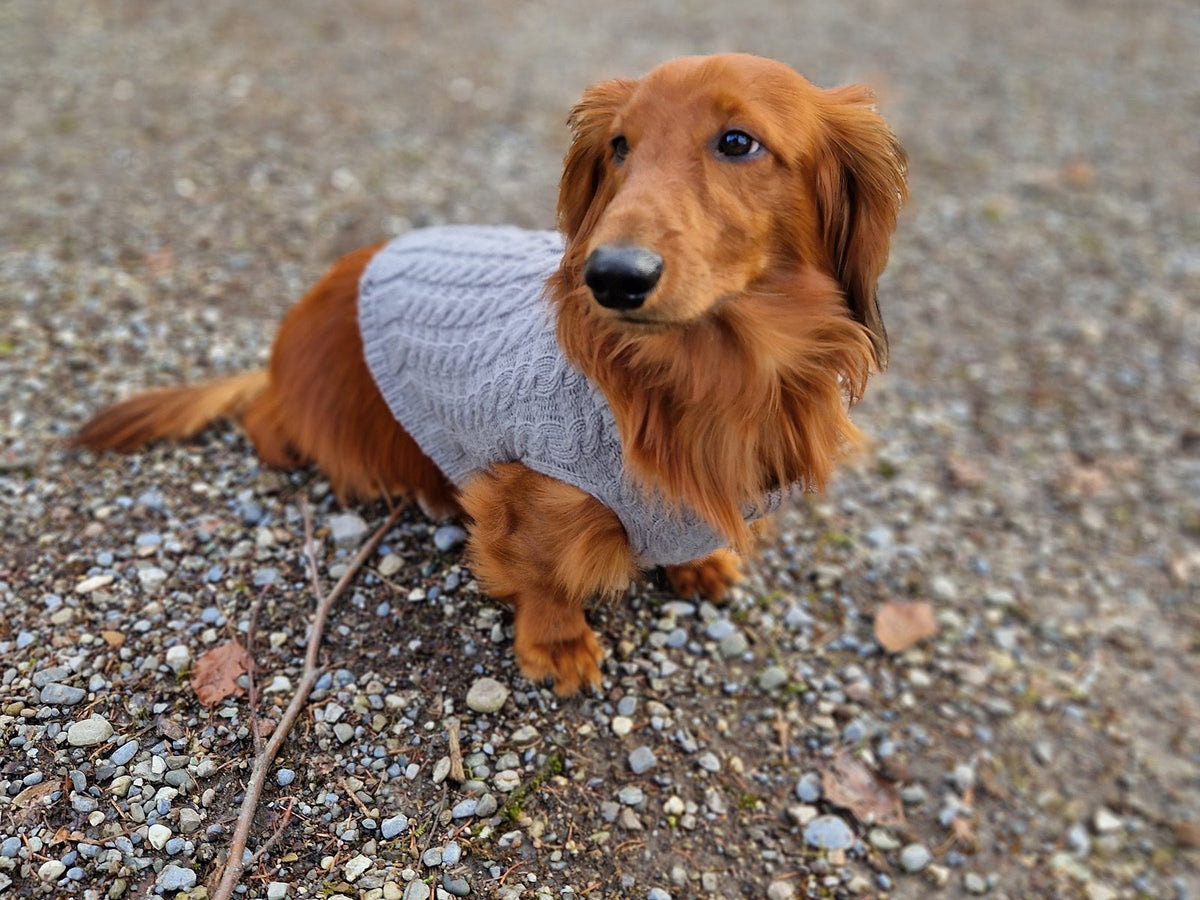
Many dog owners breathe a sigh of relief in September: the heat is over, the hiking trails are empty and tick season seems to be done. That is exactly the mistake that makes dogs ill every year. In Switzerland, autumn is one of the most active tick periods of all. Our Vico picked up most of his ticks to date not in July but on a mild October afternoon in the leaves at the edge of the woods. In this article we explain why ticks are so active in autumn, where they lurk, how to check your dog properly and which protective measures make sense.
Why ticks are especially active in autumn
The castor bean tick, the most common tick species in Switzerland, does not need summer heat. It becomes active as soon as temperatures stay above roughly seven to eight degrees for several days in a row. In dry spells at the height of summer it is actually too hot and too dry for it, and it retreats into the damp layer of soil. In autumn, by contrast, everything is right: mild temperatures, humid air, morning dew and a thick carpet of leaves in which ticks find moisture. This is why many regions see a second peak of activity in September and October that often lasts well into November. Only sustained frost ends the season, and mild winters push that point further and further back.
Added to this is the ornate dog tick, which has spread across Switzerland in recent years. It is active precisely in the cooler months and can transmit babesiosis, a serious disease for dogs. That is another reason why it pays not to stop tick protection when summer ends.
Where your dog picks up ticks in autumn
Ticks do not jump and they do not drop out of trees. They sit on blades of grass, ferns and low branches close to the ground and wait for a host to brush past. Typical autumn hotspots are the edges of woods, clearings, tall grass along field paths, embankments and, above all, piles of leaves. That is exactly where dogs love to stick their noses. With small, low-slung dogs such as Dachshunds, the whole belly brushes through the vegetation, which raises the hit rate accordingly.
If you want to reduce contact, stay on wide paths, avoid rummaging through the undergrowth and keep your dog away from leaf piles. Contact cannot be avoided completely, though, and a dog should be allowed to be outdoors in autumn after all. That is why the following two points are decisive.
Check your dog after every walk
The most effective measure costs nothing but a few minutes: check your dog after every walk. Ticks often wander around in the coat for a while before they bite, and many pathogens are only transmitted after several hours of feeding. If you find a tick early, you lower the risk considerably.
Their favourite spots are the head and ears, the area under the collar, armpits, groin, belly, the spaces between the toes and the base of the tail. With long-haired dogs it helps to work systematically through the coat against the grain. A grooming glove such as the FurCare glove is practical for this: it picks up loose hair and dirt as you stroke, and you feel small bumps on the skin straight away. For many dogs it feels like a massage, which makes the daily check a lot more relaxed.
Found a tick: how to remove it properly
Grip the tick as close to the skin as possible with tick tweezers, a tick card or fine pointed tweezers and pull it out slowly and evenly. Do not twist, do not squeeze and never put oil, glue or alcohol on the tick. Such home remedies stress the tick and make it release more saliva, which tends to encourage the transmission of pathogens. Afterwards, disinfect the spot and keep an eye on it over the next few days. A small red mark is normal and usually disappears quickly. Make a note of the date: it helps the vet if your dog shows symptoms later on.
Tick protection in autumn: the options
You should discuss the basis of your dog's protection with your vet. Depending on the region, your dog's lifestyle and state of health, they will recommend spot-on products, chewable tablets or a medicated tick collar. Such products are tested and work for a defined period. Important for autumn: work out how long the last treatment lasts. A great many dogs are simply unprotected in October because the summer product has worn off and nobody thinks about it any more.
As a supplement, many dog owners rely on collars with plant-based active ingredients. The Seisso flea and tick collar from our range is one such collar: it relies on essential oils, according to the manufacturer citronella and eucalyptus oil, has little odour and leaves no greasy film in the coat. The band can be cut to the right length and is worn in addition to the normal collar, just as Vico wears it in the photo above. It comes in two sizes for small and large dogs, each with or without a storage box, from CHF 18.95. To put this in perspective: a repellent collar like this can deter ticks, but it does not replace protection recommended by your vet and does not protect against diseases. Watch the skin under the band during the first few days, and ask your vet first if you have a puppy, a pregnant bitch or a sensitive dog. You will find more grooming products for everyday use in our Pet care category.
When to see the vet
A tick bite alone is no cause for concern. You should pay attention if, in the days or weeks afterwards, your dog develops a fever, seems tired and off its food, goes lame, has swollen joints or shows pale gums and dark urine. These can be signs of Lyme disease, anaplasmosis or babesiosis. All three can be treated well if they are caught early. In such cases, do not wait and see: go to the vet and mention the tick contact.
Frequently asked questions
Until when are ticks active in Switzerland?
As long as temperatures stay above roughly seven to eight degrees, which in many years means well into November. In mild winters and in sheltered, sunny spots, individual ticks can even be active in December. Tick protection should therefore only end with the first sustained frost.
Is a tick collar with essential oils enough protection on its own?
As the sole protection in areas with many ticks, usually not. Such collars can deter ticks and are a sensible addition to the daily check. The basis should be a product that your vet recommends for your dog.
How quickly does a tick need to be removed?
As quickly as possible. Many pathogens are only transmitted after several hours of feeding, which is why checking your dog right after the walk lowers the risk considerably. Remove the tick close to the skin with tick tweezers or a tick card, and without home remedies.