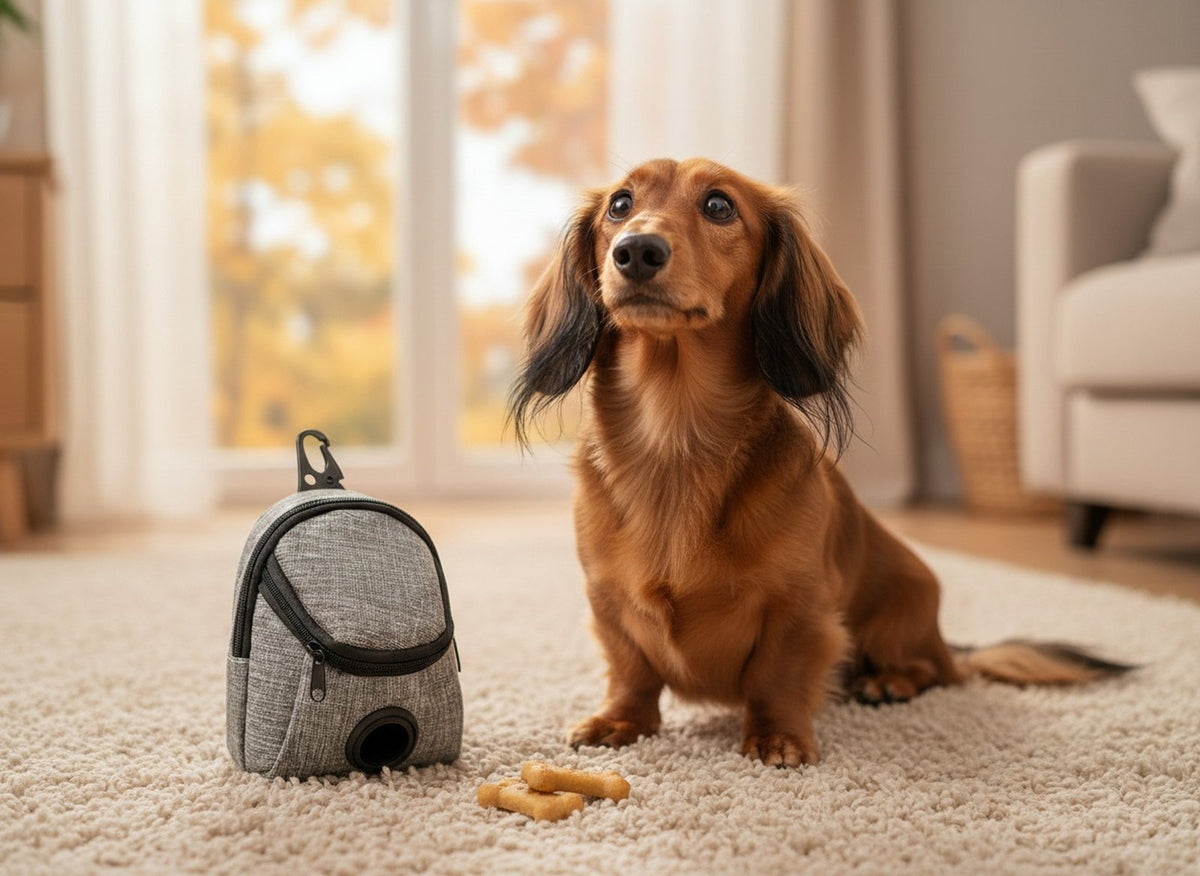
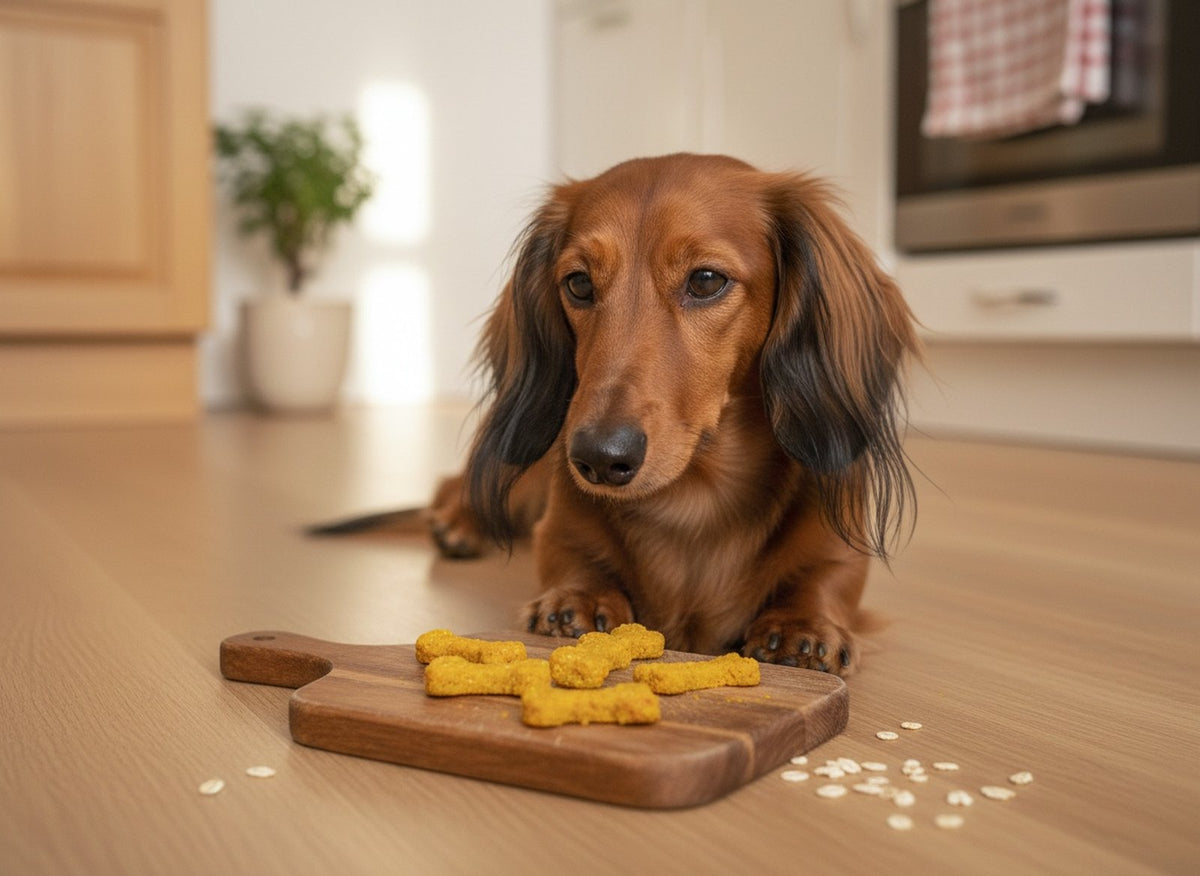
The same food in the bowl every day, and at some point your dog just gives it a half-hearted sniff: many dog owners know the scene. A food topper is the easiest way to add variety to the bowl without switching the food that works for your dog. Here you will find out what a topper actually is, when it makes sense, how much belongs in the bowl and what to look for in the ingredients.
What is a food topper?
A food topper is an addition you sprinkle over your dog's usual food: crunchy pieces, crumbles or flakes that bring scent, flavour and texture to the meal. The name says it all: it goes on top. The important part is how you frame it: a topper complements the meal, it does not replace it. Your dog still gets his complete food, the topper simply makes it more interesting.
So a topper is not a complete food and not a product with health claims either. The best way to think of it is as a seasoning for the dog bowl: a small amount with a noticeable effect on the enthusiasm in front of it.
When a topper makes sense
A topper helps most with fussy eaters who tolerate their dry food perfectly well but find it boring. The more intense scent on top makes the bowl exciting again without changing the food itself. That is also the gentler route: an abrupt food change can upset the digestive tract, while a topper only changes the surface of the meal.
A second use: moistened with a little water, dry food and topper turn into something of a gourmet dish, and your dog takes in extra fluid along the way. Especially during the heating season, many dogs drink rather too little; you can read more in our post Is my dog drinking enough?. And because crunchy topper pieces also work on their own, you can use them as small rewards on the go.
How much topper belongs in the bowl?
For our toppers the recommendation is simple: sprinkle about 10 g over the usual food, dry or slightly moistened. More is not needed, the topper is there to season, not to fill.
Keep in mind that a topper belongs in the same calculation as treats: everything your dog gets beside the main food should together make up no more than around ten per cent of the daily ration. If your dog needs to watch his weight, reduce the main food accordingly. If your dog has a medical condition, eats a special diet or has known allergies, it is best to check with your veterinary practice first whether a topper fits the menu.
What to look for in the ingredients
A good topper has a short ingredient list in which you recognise every single ingredient. If it says oats, water, carrots, coconut oil and ginger, you know exactly what your dog is getting. The longer the list and the more additives, the closer you should look. Preservatives, colourings and flavourings have no place in a good topper.
Two points worth knowing: wheat-free is not the same as gluten-free. A topper based on oats contains no wheat, but oats are not automatically gluten-free. For most dogs this makes no difference; if your dog has a diagnosed intolerance, discuss the choice with your veterinary practice. And: ingredients like chia or ginger are often marketed as superfoods. They are good, natural ingredients, but not miracle cures. A topper makes meals more attractive; health problems still belong in the veterinary practice.
Two toppers, handmade in Lugano
We recently added two food toppers from a small bakery in Lugano. Kate, a certified canine nutritionist, bakes every batch by hand and only once it has been ordered; delivery therefore takes 5 to 7 working days. Both toppers are vegan, made without wheat and contain no preservatives, colourings or flavourings. One pack contains 250 g.
The Carrot & Ginger food topper is the mild choice: five ingredients (oats, water, carrots, coconut oil, ginger), with a gentle dose of ginger, the root many owners value for sensitive stomachs. Our Vico currently gets exactly this topper on his food, and the pre-meal sniffing has become noticeably shorter than the eating.
The Blueberry & Chia food topper brings fruit into play: oats, water, blueberries, desiccated coconut, coconut oil and chia seeds, nothing else. Chia seeds provide plant-based omega-3 fatty acids, fibre and protein. You will find both toppers and all other varieties from the bakery in our collection Handmade dog treats from Switzerland.
How to introduce a topper
Even though a topper is only a small addition: start slowly. For the first few days, sprinkle just half a portion over the food and watch how your dog tolerates the new ingredient. If you notice soft stools or discomfort, stop the topper and ask your veterinary practice if you are unsure.
For variety later on: sprinkle it dry over the food, moisten it with a little warm water or give a few pieces on their own as a reward. If you enjoy going the extra mile, combine the topper with other healthy additions; you will find serving ideas with pumpkin puree in our post Can dogs eat pumpkin?.
Frequently asked questions
Does a food topper replace the normal food?
No. A topper is not a complete food and does not cover your dog's nutritional needs. It adds flavour and variety to the meal, while the basis remains the usual, complete food.
How much topper per day is fine?
For our toppers: about 10 g over the food. Toppers and treats together should not make up more than around ten per cent of the daily ration; for overweight dogs, reduce the main food accordingly.
Is a topper suitable for every dog?
For healthy adult dogs, generally yes. For puppies, pregnant dogs, allergies, special diets or existing conditions, check with your veterinary practice before the first portion. If your dog does not tolerate an ingredient, stop the topper again.