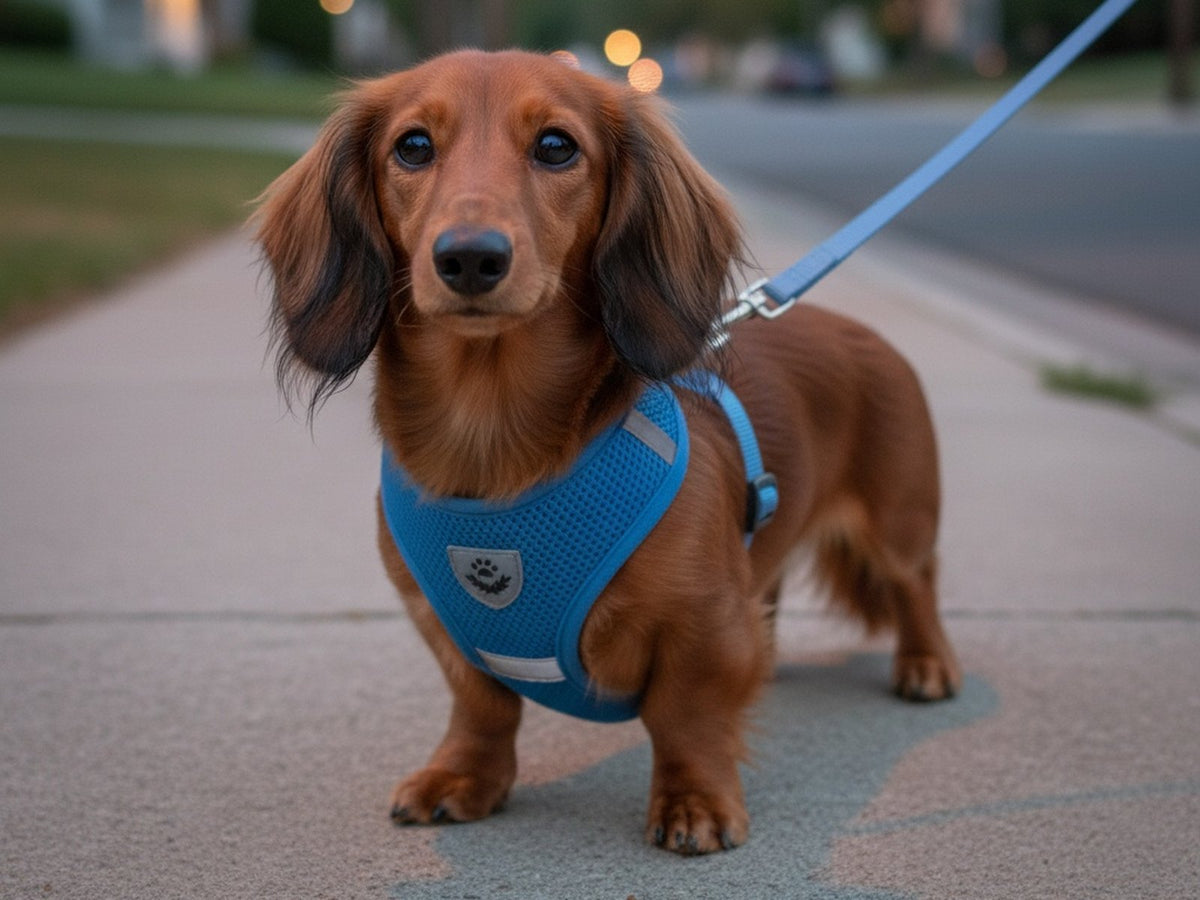
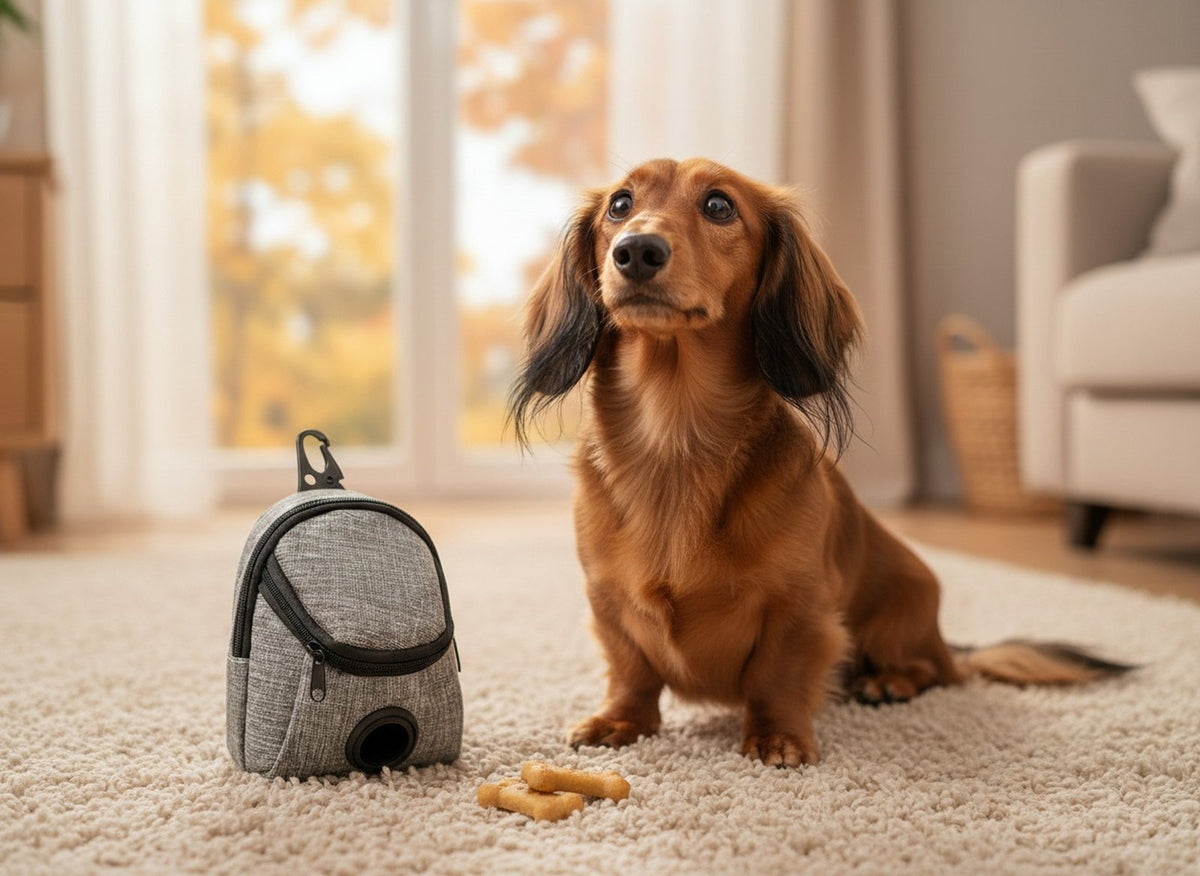
Click, click, click: if you hear your dog on the parquet or the tiles before you see them, their claws are usually too long. In autumn and winter this happens faster than many people think. Walks get shorter and lead more often over soft forest floor or wet meadows instead of tarmac, so the claws wear down less. Here you will find out how to tell when the claws are too long, how to trim them step by step and what to do if something does go wrong.
Why overly long claws are a problem
Claws that touch the ground when your dog is standing push the toes slightly upwards with every step. The dog shifts its weight and walks less naturally. On smooth floors it also loses grip and slips more easily. Vets point out that a permanently altered posture can put extra strain on the joints and back. You can read about other ways to protect your dog's joints in everyday life in our article Protecting your dog's joints.
Very long claws can also tear or curl into the pad. This applies especially to the dewclaws on the inside of the paw: they never touch the ground and therefore do not wear down at all.
How to tell that the claws are too long
- The clicking: if you hear the claws on hard floors with every step, it is time.
- The standing test: when your dog stands calmly on a flat surface, the claws should just not touch the ground.
- The dewclaws: if they are already curving towards the skin, they need trimming.
- The gait: if your dog slips more often or splays its toes noticeably, it is worth taking a closer look.
The right tool
For most dogs, a plier-style claw clipper is the best choice. With the Pawfect claw clipper you trim the claws with stainless steel blades in one clean cut. A spring between the rubberised handles opens the clipper again after each cut, so you can concentrate fully on the paw. Whatever model you use, the blade must be sharp. A blunt clipper squashes the claw instead of cutting it, and that is unpleasant for the dog. Nail clippers for humans are not made for hard, curved dog claws.
You will also need good light, a few small treats and, for emergencies, a clean cloth or styptic powder from your vet or a pet shop.
Step by step: how to trim the claws
- Choose a calm moment. After a walk your dog is usually more relaxed. Sit on the floor with them or let them lie on a blanket.
- Hold the paw gently. Take the paw calmly in your hand and press lightly on the toe pad with your thumb so that the claw extends a little.
- Find the quick. Each claw contains a blood vessel and a nerve, known as the quick. In light-coloured claws you can see it as a pink area. Always cut well in front of it.
- Trim only the tip. Better a little several times than too much at once. Hold the clipper so that the cut roughly follows the angle of the underside of the paw.
- Reward. After every claw or every paw there is a treat. It does not all have to happen in one day: two paws today and two tomorrow is perfectly fine.
Black claws: in small steps
Like many dachshunds, our Vico has dark claws. Here the quick cannot be seen from the outside. So trim only thin slices and look at the cut surface after each cut. If a light, slightly moist core or a dark dot appears in the middle, you are close to the quick and should stop on that claw. In claws that have been too long for a while, the quick grows with them. With regular, careful trimming it usually recedes a little over the weeks. So the rule is: a little more often rather than a lot rarely.
If it does bleed
This happens to experienced dog owners too. Stay calm so that your dog stays calm as well. Press a clean cloth or some cotton wool onto the claw for a few minutes or dab on styptic powder. If the bleeding does not stop, your dog keeps limping or the claw is torn, have it checked at the vet.
Don't forget the paw hair in winter
Many dogs grow hair between their pads that sticks out beyond the pads. In winter, clumps of snow and ice like to form in it, and indoors on smooth floors it acts like felt slippers. Trim this hair flush with the pads. A pair of scissors with a rounded tip, such as the SafePet grooming scissors, is well suited for this because the round tip protects the sensitive skin between the toes. Only cut the fur that sticks out beyond the pads, and not deep between the toes. You will find more helpers for paws, coat and teeth in our Dog care collection.
If your dog does not like having its claws trimmed
Many dogs do not like having their paws held. So practise without the clipper first: touch the paw briefly, treat, let go. Then show the clipper and gently tap a claw with it, another treat. Only when this goes smoothly does the first cut follow. If your dog resists strongly or panics, do not force them. Your vet or a dog groomer can also trim the claws, and you can ask them to show you what works best for your dog.
Frequently asked questions
How often do I need to trim my dog's claws?
That depends on the dog and the surface. Dogs that walk a lot on tarmac need it less often. It is best to check the claws every two to three weeks and trim them as soon as you hear them clicking on hard floors. In the cold season this is often needed more frequently than in summer.
Can I file the claws instead of cutting them?
Yes. A claw file smooths sharp edges after trimming and is an alternative for dogs that really do not like the clipper. For claws that are clearly too long, the clipper is usually quicker and less tiresome for the dog.
What should I do if I have cut too deep?
Press a clean cloth onto the claw for a few minutes or use styptic powder. The bleeding usually stops quickly. If it bleeds for longer or your dog is still clearly favouring the paw the next day, have it checked by a vet.