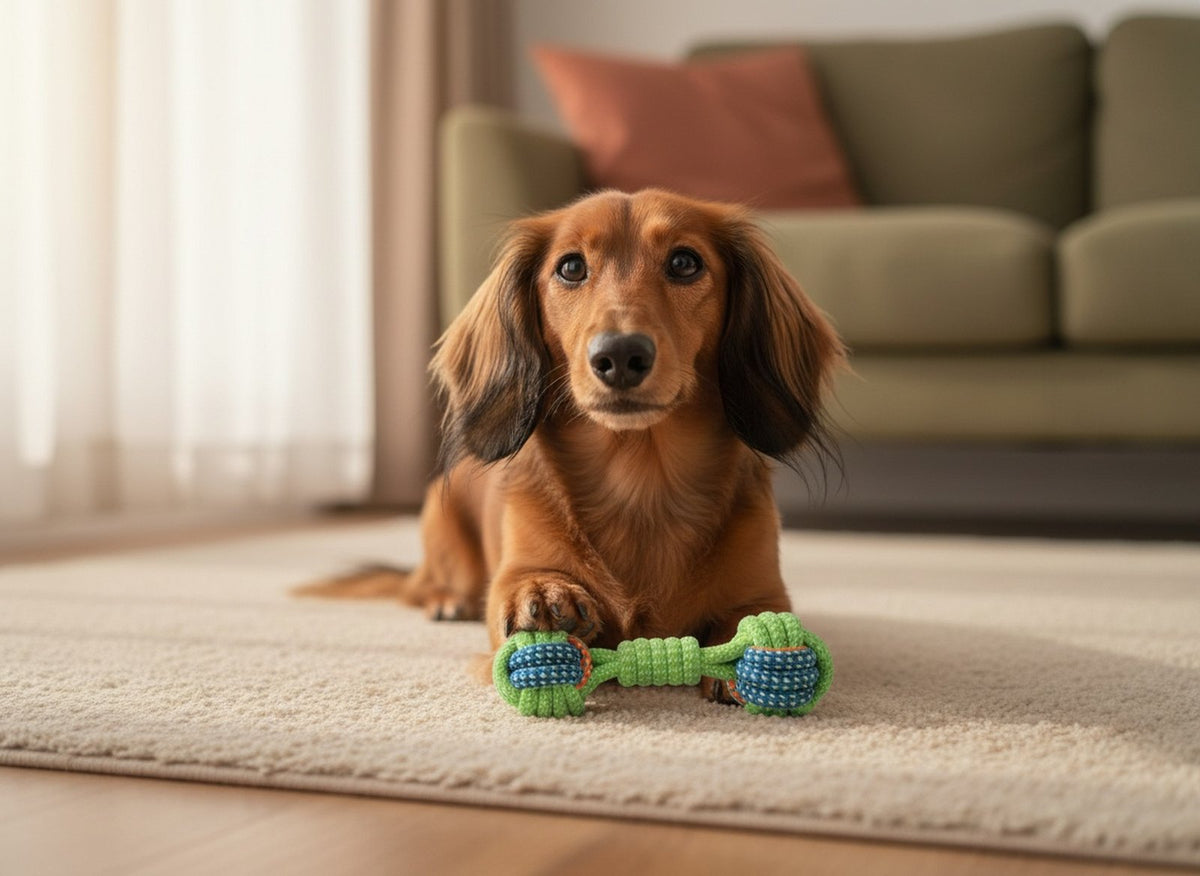
At the end of October the clocks change to winter time, and suddenly it is already dark by the time you finish work. The big evening walk in daylight disappears, the morning starts at dusk, and many familiar routines get thrown off balance. Our Vico notices it every year: in summer he waits expectantly by the door in the evening, in November he first takes a sceptical look out into the cold, wet darkness.
The good news is that it does not take much to get through the dark season well. What matters is that you adjust your routine deliberately instead of simply shifting your summer programme into the dark. In this guide you will learn how to spread walks, enrichment and rest sensibly across the short days.
Why fixed routines help so much right now
Dogs love predictability. Fixed feeding times, regular walk times and familiar rituals give them orientation, especially when so much is changing outside. If walks suddenly become shorter and happen at different times, some dogs react with restlessness in the evening or excess energy around the house.
So take a moment to think about what your day should look like in the winter months: when is the longest walk realistic? When is food served? When do you play, and when is it time to rest? The more stable this framework is, the more relaxed your dog will be through the dark months.
The most important walk: in daylight whenever possible
Schedule the longest walk of the day for the brightest hours, usually around midday or in the early afternoon. If you work from home, the lunch break is ideal for this. If you are out of the house during the day, a family member, a neighbour or a dog walker may be able to help. And at the weekend it is worth planning the big outings deliberately for daytime.
The daylight does you both good, and your dog simply sees more of his surroundings. The morning and evening rounds can be shorter in return, as long as the exercise across the whole day adds up.
The evening round: shorter, but with plenty of sniffing
The evening walk does not have to be the big tour. A compact round on which your dog is allowed to sniff extensively often tires him out more than a brisk march on a tight leash. Sniffing is mental work: give him time at interesting spots instead of pulling him along.
For the dark rounds, choose familiar, well-surfaced paths and take a light with you. Light directly on the leash is practical: the LED GlowDog extendable leash has a small torch at the tape opening that lights up the path ahead of you, and a light ring on the housing that makes you visible to cyclists and cars earlier. Add reflective or light-up gear for your dog; you will find an overview in our collection Visible in the Dark. For a detailed look at how to make your dog visible in the dark, read our article Visibility in the dark.
Balance things out indoors
On cold, wet evenings, part of the enrichment can move indoors. Short search and sniffing games, a few tricks or a food puzzle tire your dog out pleasantly without another trip outside. Deduct the treats you use from the daily ration so no extra weight creeps in over the winter.
A calm evening ritual has worked well for us: after the last round, Vico gets his SchleckSpass lick mat, spread thinly with a little wet food. The extensive licking keeps him busy for a few minutes and has a calming effect on many dogs, a lovely way to end the day.
Rest is part of the routine
In the dark season many dogs rest more than in summer, and that is perfectly fine. Provide a warm, draught-free sleeping spot away from the cold floor and dry your dog off well after wet rounds. Also plan deliberate quiet phases when nothing is happening at all: no visitors, no games, no attention. Especially in the busy run-up to Christmas, this is worth more than you might think.
If your dog seems low
A dog becoming a little more laid-back in winter is usually no cause for concern. But if he seems noticeably listless for an extended period, eats less or suddenly refuses walks altogether, have it checked at your veterinary practice. Such changes can be caused by pain, for example, which is not always obvious at first glance.
Frequently asked questions
Does my dog need less exercise in winter?
The need for exercise fundamentally remains, even though many dogs become somewhat calmer overall. Spread the exercise across several shorter rounds and add mental work. Quality counts for more than pure kilometres.
When is the best time for a walk in winter?
The longest round is best placed in the brightest part of the day, usually around midday. Shorter rounds are enough in the morning and evening. More important than the exact time is that the times stay reasonably stable so your dog can rely on them.
My dog does not want to go out in the dark. What can I do?
Keep the evening round short and pleasant: familiar paths, a light on the leash and a coat for dogs that feel the cold. A small ritual afterwards, such as the lick mat, helps too. If your dog suddenly and persistently refuses to go outside, have your veterinary practice check that everything is fine health-wise.